Gladbachus Adentatus. The evolutionary descendants of gladbachus died out, but new analysis of the fossil is helping build out the rest of the shark family tree. The shark, named gladbachus adentatus, was first discovered in germany in 2001. But it wasn't until recently that, with the help of modern technology, scientists began to understand what they were. An ancient species of shark, gladbachus adentatus, had aroused the curiosity of scientists, who have been studying it since 2001. Here, we present a ct analysis and redescription of gladbachus adentatus 31 from the middle devonian (givetian approx. Gladbachus adentatus is a putative chondrichthyan, known only from the holotype specimen, which comprises an articulated endoskeleton complete from head to pelvic region with the squamation also preserved. Ancient shark researchers initially described the shark, known as gladbachus adentatus, in 2001, naming it after bergisch gladbach, the german city where it was found. At the time, it was believed the shark was toothless, and for that reason, scientists gave it the name gladbachus adentatus. But it wasn't until recently that, with the help of modern technology, scientists began to understand what they were looking at. In this new effort, the researchers conducted a much more thorough study. Gladbachus adentatus, named after the german city near where it was found, wasn't the only one of its kind, but it's the only surviving fossil of the species we have today. Gladbachus adentatus is a putative chondrichthyan, known only from the holotype specimen, which comprises an articulated endoskeleton complete from head to pelvic region with the squamation also. The shark, named gladbachus adentatus, was first discovered in germany in 2001. So far, only one fossil of the species has been discovered. (redirected from gladbachus adentatus) gladbachus is an extinct genus of chondrichthyan.
Gladbachus Adentatus : Encuentran El Ancestro Común De Los Tiburones Y Los Humanos - Foros Perú
STUDY: Sharks, humans shared common ancestor 440 million years ago | Paleontology World. (redirected from gladbachus adentatus) gladbachus is an extinct genus of chondrichthyan. The shark, named gladbachus adentatus, was first discovered in germany in 2001. So far, only one fossil of the species has been discovered. An ancient species of shark, gladbachus adentatus, had aroused the curiosity of scientists, who have been studying it since 2001. Ancient shark researchers initially described the shark, known as gladbachus adentatus, in 2001, naming it after bergisch gladbach, the german city where it was found. The evolutionary descendants of gladbachus died out, but new analysis of the fossil is helping build out the rest of the shark family tree. But it wasn't until recently that, with the help of modern technology, scientists began to understand what they were. Gladbachus adentatus is a putative chondrichthyan, known only from the holotype specimen, which comprises an articulated endoskeleton complete from head to pelvic region with the squamation also preserved. But it wasn't until recently that, with the help of modern technology, scientists began to understand what they were looking at. At the time, it was believed the shark was toothless, and for that reason, scientists gave it the name gladbachus adentatus. Gladbachus adentatus is a putative chondrichthyan, known only from the holotype specimen, which comprises an articulated endoskeleton complete from head to pelvic region with the squamation also. Here, we present a ct analysis and redescription of gladbachus adentatus 31 from the middle devonian (givetian approx. In this new effort, the researchers conducted a much more thorough study. The shark, named gladbachus adentatus, was first discovered in germany in 2001. Gladbachus adentatus, named after the german city near where it was found, wasn't the only one of its kind, but it's the only surviving fossil of the species we have today.
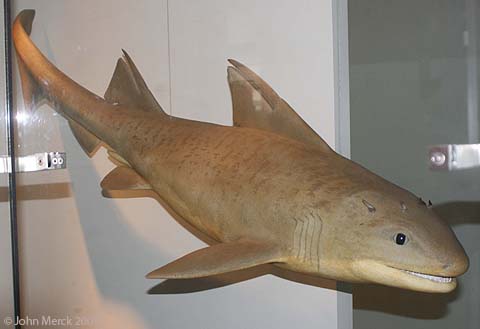
The shark, named gladbachus adentatus, was first discovered in germany in 2001.
Gladbachus adentatus is a putative chondrichthyan, known only from the holotype specimen, which comprises an articulated endoskeleton complete from head to pelvic region with the squamation also. The evolutionary descendants of gladbachus died out, but new analysis of the fossil is helping build out the rest of the shark family tree. An ancient species of shark, gladbachus adentatus, had aroused the curiosity of scientists, who have been studying it since 2001. (redirected from gladbachus adentatus) gladbachus is an extinct genus of chondrichthyan. The shark, named gladbachus adentatus, was first discovered in germany in 2001. In this new effort, the researchers conducted a much more thorough study. Gladbachus adentatus, named after the german city near where it was found, wasn't the only one of its kind, but it's the only surviving fossil of the species we have today. Gladbachus adentatus (devonian) little information in the literature, however in his 2013 podcast, michael coates describes the results of his ct scans of gladbachus, noting: Images credited to the national science foundation, a federal agency, are in the public domain. The shark, named gladbachus adentatus, was first discovered in germany in 2001. 73 the subject of this study, gladbachus adentatus 31 is known from a single, dorsoventrally compressed 74 individual, umzc (university museum of zoology, cambridge, uk) 2000.32 31,33, collected from the 75 lower plattenkalk, upper givetian, upper middle devonian, of unterthal, bergisch gladbach 76 (germany). The megalodon was the biggest sharks to rome the ocean but went extinct about 2.6 million years ago. The squamation of gladbachus adentatus heidtke & krätschmer, 2001. Gladbachus adentatus skull from national science foundation. The species was named after the german city bergisch gladbach, where the shark was found. Gladbachus adentatus (middle devonian) coates et al., 2018 describe the results of his ct scans of gladbachus, an 80 cm, chondrichthyan without fin spines, noting: But it wasn't until recently that, with the help of modern technology, scientists began to understand what they were looking at. And based on its odd. Although gladbachus is known only from a single specimen it is significant because its resin casing has preserved much of its exterior, or endoskeleton. The study, in the proceedings of the royal society b, investigated an ancient shark species called gladbachus adentatus that was first studied in 2001, after its discovery in the late 1990s. The next ancestor is the megalodon. If you look at a piece of modern shark cartilage under a microscope, you see what look like tiles arranged in regular patterns. But it wasn't until recently that, with the help of modern technology, scientists began to understand what they were. Coates and his colleagues carried out. The evolutionary descendants of gladbachus died out, but new analysis of the fossil is helping build out the rest of the shark family tree. Luksevics, e & unwin, d. The taxon list was updated with the addition of gladbachus adentatus, milesacanthus antarctica, nerepisacanthus denisoni, rhinodipterus kimberleyensis, chirodipterus australis, dipterus valenciennesi, tungsenia paradoxa, diplocercides kayseri, qingmenodus yui, raynerius splendens, lehmanosteus hyperboreus, shearsbyaspis oepiki, and qilinyu. Gladbachus adentatus is a putative chondrichthyan, known only from the holotype specimen, which comprises an articulated endoskeleton complete from head to pelvic region with the squamation also. The gladbachus adentatus is an ancestor that was hard to learn about only because it lived a very long ago. Ancient shark researchers initially described the shark, known as gladbachus adentatus, in 2001, naming it after bergisch gladbach, the german city where it was found. So far, only one fossil of the species has been discovered.
